Common Procedures
Sealants
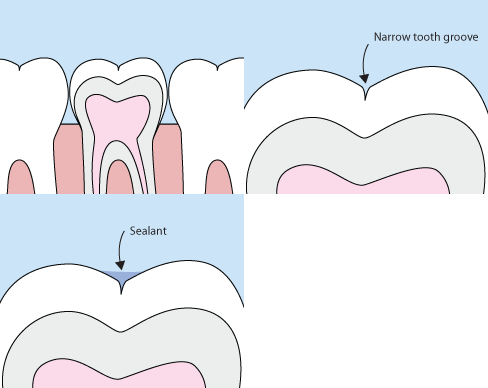 Sometimes brushing is not enough, especially when it comes to those hard-to-reach spots in your child's mouth. It is difficult for a toothbrush to get in-between the small cracks and grooves on teeth. If left alone, those tiny areas can develop tooth decay. Sealants give your child's teeth extra protection against decay and help prevent cavities.
Dental sealants are a plastic resin that bonds and hardens in the deep grooves on the tooth's surface. When a tooth is sealed, the tiny grooves become smooth, and are less likely to harbor plaque. With sealants, brushing becomes easier and more effective against tooth decay.
Sealants are typically applied to children's teeth as a preventive measure to prevent tooth decat after the permanent teeth have erupted. It is more common to seal "permanent" teeth rather than "baby" teeth, but every patient has unique needs, and the dentist will recommend sealants on a case-by-case basis.
Sealants last from three to five years, although it is fairly common to see adults with sealants still intact from their childhood. A dental sealant only provides protection when it is fully intact, so if your child's sealants come off, let the dentist know and schedule an appointment for your child's teeth to be re-sealed.
Fluoride
Fluoride is effective in preventing cavities and tooth decay and in preventing plaque from building up and hardening on the tooth’s surface. A fluoride treatment in your dentist’s office takes just a few minutes. Depending on your oral health or your doctor’s recommendation, you may be required to have a fluoride treatment every three, six, or 12 months.
Fillings
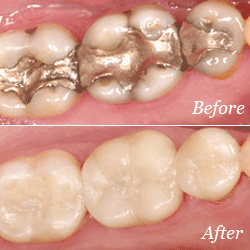 Newer dental fillings include ceramic and plastic compounds that mimic the appearance of natural teeth. These compounds, often called composite resins, are normally used on the front teeth where a natural appearance is important, as well as on the back teeth depending on the location and extent of the tooth decay.
What's Right for Your Child?
Several factors influence the performance, durability, longevity, and expense of dental restorations, including:
- The components used in the filling material
- The amount of tooth structure remaining
- Where and how the filling is placed
- The chewing load that the tooth will have to bear
- The length and number of visits needed to prepare and adjust the restored tooth.
Before your child's treatment begins, the doctor will discuss with you all of your options and help you choose the best filling for your child's particular case.
Bonding
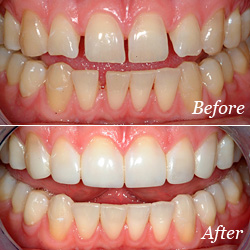 Bonding is a conservative way to repair slightly chipped, discolored, or crooked teeth. During dental bonding, a white filling is placed onto your tooth to improve its appearance. The filling "bonds" with your tooth, and because it comes in a variety of tooth-colored shades, it closely matches the appearance of your natural teeth.
Tooth bonding also can be used for tooth fillings instead of amalgam fillings. Many patients prefer bonded fillings because the white color is much less noticeable than the silver amalgam fillings. Bonding fillings can be used on front and back teeth depending on the location and extent of tooth decay.
Bonding is less expensive than other cosmetic treatments and usually can be completed in one visit to our office. However, bonding can stain and is easier to break than other cosmetic treatments such as porcelain veneers. If it does break or chip, tell your doctor. The bonding generally can be easily patched or repaired in one visit.
Digital X-Rays
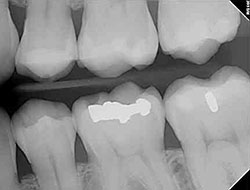 Using the most advanced dental technology possible is just as important as staying up-to-date on the latest treatment techniques. Because our practice is dedicated to providing your child with the safest and most convenient treatment options available, we utilize advanced digital X-ray technology in our office.
Is a digital X-ray really safer?
Because we care about your child's entire body's health and well-being, we believe that reducing the amount of radiation exposure is extremely important. Although the amount of radiation used in dental X-rays is very small, the effect is cumulative, so all radiation counts. Digital X-rays can reduce your child's exposure to radiation by up to 80%!
What are the advantages of digital X-rays?
- We want your little one to be as comfortable as possible during their appointment, and digital X-rays eliminate the need to bite down on a sharp piece of film encased in plastic.
- There is no need to wait for the X-ray film to be developed before it can be viewed, so the entire checkup can be a lot shorter.
- The digital images can be enlarged and manipulated, giving the doctor a clear, more detailed look at your child's teeth.
- Because your child can see the image enlarged on a screen, they can better understand why taking care of their teeth is important.
- It's better for the earth! There is no need to use harmful chemicals to process film.
Our practice is focused on making your child's dental experience as comfortable as possible. At their next appointment, we'll be happy to answer any questions you may have.
Extractions
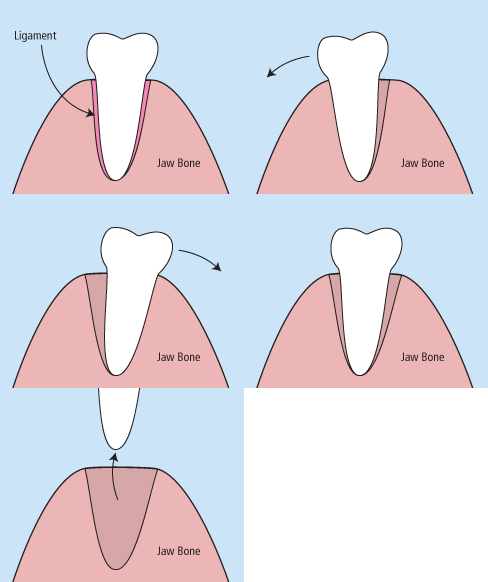 There are times when it is necessary to remove a tooth. Sometimes a baby tooth has misshapen or long roots that prevent it from falling out as it should, and the tooth must be removed to make way for the permanent tooth to erupt. At other times, a tooth may have so much decay that it puts the surrounding teeth and jaw at risk of decay, so your doctor may recommend removal and replacement with a bridge or implant. Infection, orthodontic correction, or problems with a wisdom tooth can also require removal of a tooth.
When it is determined that a tooth needs to be removed, your dentist may extract the tooth during a regular checkup or may request another visit for this procedure. The root of each tooth is encased within your jawbone in a "tooth socket," and your tooth is held in that socket by a ligament. In order to extract a tooth, your dentist must expand the socket and separate the tooth from the ligament holding it in place. While this procedure is typically very quick, it is important to share with your doctor any concerns or preferences for sedation.
Once a tooth has been removed, neighboring teeth may shift, causing problems with chewing or with your jaw joint function. To avoid these complications, your dentist may recommend that you replace the extracted tooth.
Mouthguards
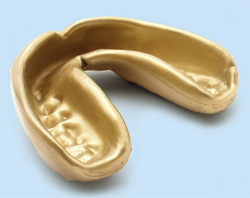 Whether you wear braces or not, protecting your child's smile while playing sports is essential. Sports related injuries to the mouth and jaw are some of the most common injuries received by athletes. Our goal is to help minimize your child's chances of a sports related injury.
Mouthguards help protect teeth and gums from injury. The American Dental Association recommends the use of a mouthguard if your child participates in basketball, boxing, hockey, football, gymnastics, lacrosse, martial arts, racquetball, rugby, track and field, skateboarding, skiing and snowboarding, skydiving, soccer, surfing, volleyball, water polo, weightlifting, or wrestling.
Types of mouthguards
Choosing the right mouthguard is essential. There are three basic types of mouthguards: the pre-made mouthguard, the "boil-and-bite" fitted mouthguard, and a custom-made mouthguard from your dentist. When choosing a mouthguard, be sure to pick one that is tear-resistant, comfortable and well fitted for your child's mouth, easy to keep clean, and does not prevent him from breathing properly. If he wears braces or a retainer, it is imperative for him to wear a mouthguard. Your dentist can show your child how to wear a mouthguard properly and how to choose the right mouthguard to protect his smile.
Taking care of your mouthguard
Similar to a retainer, braces, or any other special dental appliance, it is important to take care of your child's mouthguard by storing it properly and keeping it clean as well as knowing when to replace an old mouthguard with a new one. Here are a few simple ways to keep your child's mouthguard clean and working correctly:
- Gently scrub the mouthguard after each use with a toothbrush and toothpaste.
- Store the mouthguard in a protective case.
- Do not leave the mouthguard in the sun or in hot water, as it may melt or become deformed.
- Replace the mouthguard at the beginning of every new sports season. You should also replace your child's mouthguard if you notice it has become worn and not longer fits properly.
- Do not wear a retainer with a mouthguard. If your child wears braces, your dentist will help design a mouthguard to protect his teeth and his braces.
- Do no chew on or cut pieces off of your mouthguard. Mouthguards come in different shapes and sizes, so ask your dentist which is best for your child.
- Bring the mouthguard to each dental checkup and the dentist can check to make sure it's still in good shape!